
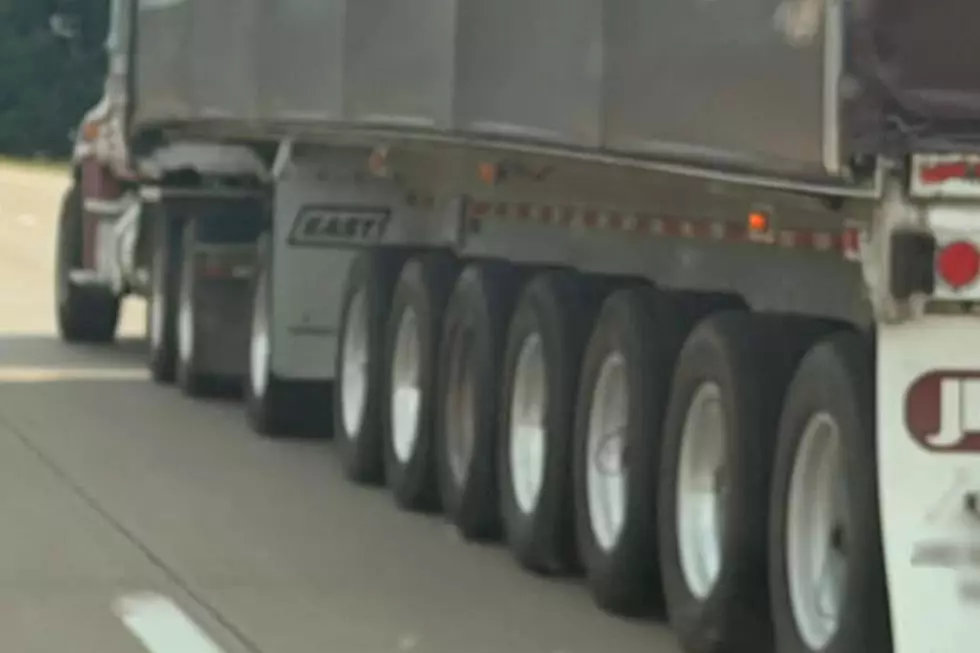
Are These Super-Heavy Trucks Ruining Michigan’s Roads?
If there's one thing Michigan residents can agree on, it's that some of our roads are terrible.
What we can't seem to agree on is why.
Michigan winters get plenty of the blame. So do road construction, funding, salt, freeze-thaw cycles, and probably whichever political party you don't like.
READ MORE: MDOT Plans Major Overhaul for Busy Delta Township Stretch
But there's another potential culprit you might not have thought about.
Did you know that Michigan law allows the heaviest trucks in America?
Michigan Allows Trucks to Weigh Up to 164,000 Pounds
According to the Federal Highway Administration, Michigan's heaviest legal trucks can weigh up to 164,000 pounds on 11 properly spaced axles. For comparison purposes, the typical 18-wheeler is limited to hauling 80,000 pounds.
The question becomes this: if Michigan allows trucks weighing more than twice as much, could that have something to do with our lousy roads?
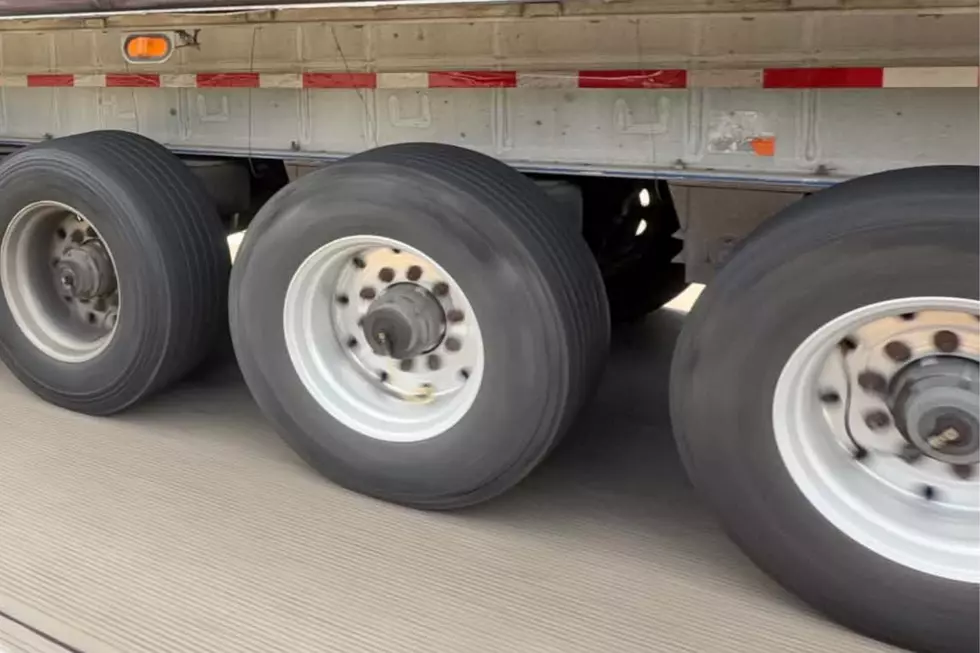
Turns out it's not nearly that simple.
Why Michigan Says Heavier Trucks Don't Necessarily Damage Roads More
Michigan's system isn't just about the total weight of the truck. It's about where that weight is sitting. Spread 164,000 pounds properly across 11 axles and the Michigan Department of Transportation argues that one of these trucks can actually cause less pavement damage than hauling the same freight on two conventional trucks.
There's a key word there that might catch your attention. Properly.
Why Axle Weight Matters on Michigan Roads
Bouzid Choubane with Michigan State University's National Center for Pavement Preservation says there are plenty of factors involved.
"In a nutshell, a road roughness can be more of a construction issue than a loading issue," Choubane says. "Further, a road condition and performance can be impacted not only by heavy loads but also how these loads are distributed and transferred to a pavement system in addition to environmental factors such as freeze-thaw cycles."
READ MORE: What Are Those Black Cables Doing All Over Michigan Roads?
Which raises even more questions.
What happens when 164,000 pounds isn't distributed properly?
How often does that happen?
How often are Michigan's heaviest trucks actually weighed axle-by-axle?
How many improperly distributed loads (or "misloads") are caught? More importantly, how many aren't?
How Does Michigan Enforce Truck Weight Limits?
Michigan State Police operates permanent scales, and officers can weigh trucks roadside with portable scales. Michigan law also sets limits for individual axle weights.
But enforcement only catches what enforcement catches.
I'm not saying these multi-axle heavy trucks are the reason Michigan roads are so bad. There are way too many variables to make that kind of claim.

But if the physics behind allowing 164,000-pound trucks depends on properly distributing all that weight, I've got one last question that remains unanswered.
How do we know what's actually happening on Michigan roads?
20 States With Worse Roads Than Michigan
Gallery Credit: jrwitl
The 10 Deadliest Roads in Michigan in 2026
Gallery Credit: Scott Clow